5 Warning Signs Your Remote Workforce Is Burning Out—And What Enterprise Leaders Can Do Right Now

Photo: stressed remote worker laptop home office burnout exhausted professional, via www.basharibrahim.com.au
The data tells a story that many executives would prefer not to hear. A 2023 survey conducted by Gallup found that 76% of employees experience burnout on the job at least sometimes, with remote and hybrid workers reporting disproportionately high rates of always-on pressure. The American Institute of Stress estimates that workplace burnout costs U.S. employers more than $300 billion annually in lost productivity, absenteeism, and turnover.
The painful irony of remote work is that the same flexibility that makes it attractive can become the mechanism of its own undoing. Without the physical boundary of an office building—without the commute that once served as a psychological buffer between professional and personal life—many remote employees find that work simply expands to fill every available hour. Slack messages arrive at 9:00 p.m. Emails are answered on Sunday mornings. The laptop never fully closes.
For enterprise leaders managing distributed workforces, recognizing burnout before it reaches a critical threshold is both a moral obligation and a business imperative. The following five indicators are among the most reliable signals that your remote team is approaching—or has already crossed—a dangerous threshold.
Warning Sign #1: Productivity Metrics Are Declining Despite Long Hours
One of the most counterintuitive characteristics of burnout is that it often coexists with, or even follows, periods of apparent overperformance. Employees who are burning out frequently log more hours than their in-office counterparts while producing progressively less. Output quality deteriorates. Deadlines slip. Errors increase in frequency.
When workforce analytics reveal a pattern of extended activity windows accompanied by declining output quality, this is not a performance problem in the conventional sense. It is a capacity problem—and addressing it with additional pressure will accelerate the decline rather than reverse it.
Platforms like CloudWork360 provide enterprise managers with nuanced productivity dashboards that distinguish between hours of activity and meaningful task completion, enabling leaders to identify this pattern early and intervene with support rather than scrutiny.
What to do: Conduct a confidential workload audit. Ask team members to map their actual weekly hours against their assigned responsibilities. The gap between stated expectations and lived reality is frequently larger than leadership assumes.
Warning Sign #2: Communication Patterns Have Shifted Noticeably
Remote teams communicate primarily through digital channels, which means that changes in communication behavior are highly observable—if leaders know what to look for. An employee who was once responsive and engaged in team discussions but has become noticeably quieter, slower to respond, or more terse in their interactions may not simply be having a bad week.
Withdrawal from team communication is a well-documented behavioral indicator of burnout. The World Health Organization classifies burnout as an occupational phenomenon characterized by, among other symptoms, increased mental distance from one's job—a detachment that manifests directly in communication behavior.
Conversely, some employees exhibit the opposite pattern: they become more reactive, more prone to conflict, or more likely to express frustration in ways that are uncharacteristic of their baseline. Both withdrawal and heightened reactivity can signal the same underlying exhaustion.
What to do: Train managers to notice and gently acknowledge these shifts during one-on-one sessions. The goal is not to confront the employee but to open a door. A simple, sincere inquiry—"I've noticed you seem a bit different lately, and I want to make sure you're doing okay"—can be the intervention that prevents a resignation.
Warning Sign #3: Paid Time Off Is Going Unused
Across the United States, a troubling pattern has emerged: remote employees are using significantly less paid time off than their pre-pandemic counterparts. A 2022 analysis by the U.S. Travel Association found that American workers collectively forfeited an estimated 768 million vacation days in a single year, with remote employees citing difficulty disconnecting as a primary barrier.
When team members are not taking the time off they have earned, it is rarely because they are so engaged that they cannot bear to step away. More commonly, it reflects an environment—implicit or explicit—in which availability is equated with commitment, and absence is perceived as a liability.
This dynamic is particularly acute in enterprise organizations where senior leaders model around-the-clock availability. Culture flows downward, and if leadership does not visibly disconnect, employees will not feel permission to do so.
What to do: Implement mandatory minimum time-off policies that require employees to take a specified number of consecutive days away from work each quarter. Equally important: senior leaders must take their own time off visibly and without apology. Normalize absence as a component of sustainable performance.
Warning Sign #4: Meeting Attendance and Engagement Are Declining
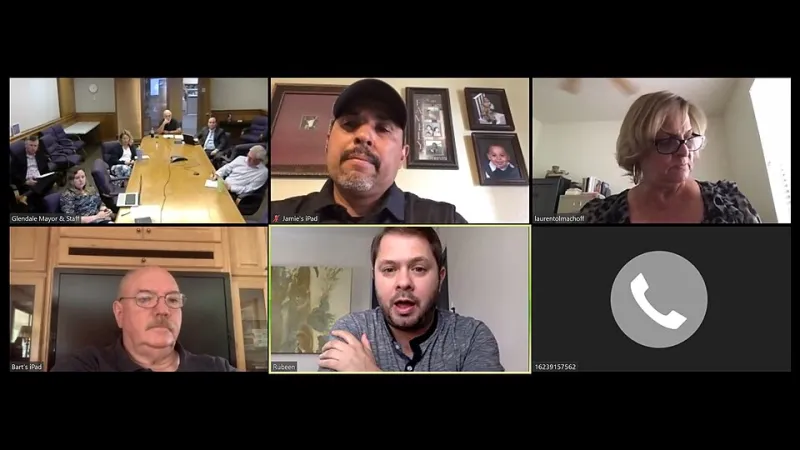
Video call fatigue is a recognized psychological phenomenon, and its effects are well-documented. Stanford University researchers identified what they termed "Zoom fatigue" as a distinct cognitive burden resulting from the sustained effort required to interpret nonverbal cues through a screen, maintain eye contact with a camera rather than a face, and remain present across back-to-back virtual sessions.
When team members begin declining optional meetings, attending required ones with cameras consistently off, or visibly disengaging during collaborative sessions, these behaviors are symptomatic of a broader depletion. The meetings themselves may not be the problem—they are often the visible symptom of a workforce that has exhausted its capacity for engagement.
What to do: Conduct a meeting audit. Evaluate every recurring meeting on your team's calendar against a simple standard: is this meeting essential, and is it optimally formatted? Many meetings that currently run 60 minutes can be restructured as 30-minute focused sessions or replaced entirely with asynchronous updates delivered through a platform like CloudWork360. Reducing unnecessary meeting load is one of the fastest, most impactful interventions available to enterprise managers.
Warning Sign #5: Turnover Intentions Are Rising Among High Performers
Voluntary turnover is the most expensive consequence of unaddressed burnout, and it is rarely distributed evenly across a team. High performers—those with the most options and the clearest awareness of their own market value—are typically the first to leave when a work environment becomes unsustainable. Their departure then places additional burden on remaining team members, initiating a compounding cycle that can destabilize entire departments.
Exit interview data frequently reveals that burnout-related dissatisfaction had been present for months or even years before an employee's departure, during which time it was never surfaced or addressed. This is not primarily a failure of the departing employee—it is a failure of the systems and relationships that should have created space for that conversation to happen earlier.
What to do: Implement structured stay interviews as a proactive complement to exit interviews. These brief, candid conversations—conducted by managers or HR partners—ask current employees what would make them more likely to remain, what is working well, and what is making their work more difficult than it needs to be. The intelligence gathered is invaluable, and the act of asking communicates that the organization values its people enough to listen before they leave.
Building a Burnout-Resilient Remote Organization
Addressing remote work burnout is not a single intervention—it is an ongoing organizational commitment that requires structural change, leadership modeling, and consistent reinforcement. Enterprise leaders who take this seriously invest in clear workload management frameworks, enforce meaningful boundaries around after-hours communication, provide access to mental health resources, and use workforce management technology to identify risk patterns before they escalate.
CloudWork360's enterprise platform supports this commitment by giving people managers the data they need to make informed decisions about team capacity, project distribution, and communication norms—without reducing employees to surveillance subjects. The goal is not to monitor exhaustion but to prevent it.
The remote workforce is not going back to the office full-time. The question for enterprise leaders is whether they will build the systems, policies, and culture required to make distributed work genuinely sustainable—or whether they will continue to extract from their people until those people have nothing left to give.