From Oversight to Insight: A Modern Manager's Guide to Leading Distributed Teams
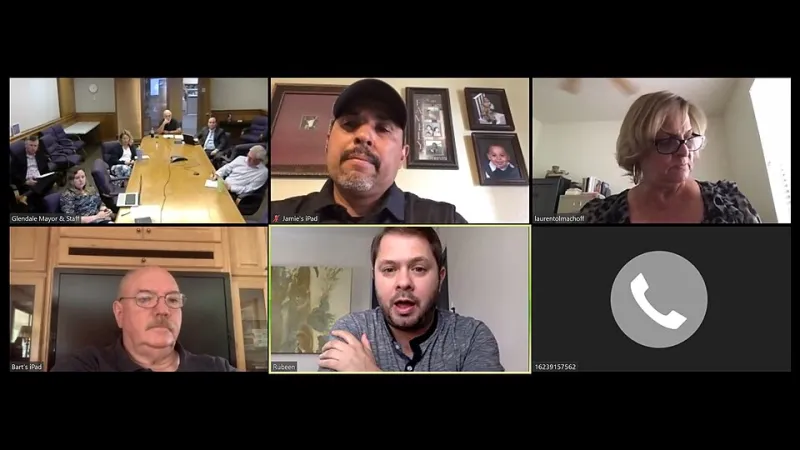
Photo: Office of Ruben Gallego, United States Congress, Public domain, via Wikimedia Commons
When the traditional office disappeared for millions of American workers, it took with it something that managers had long relied upon without fully appreciating: passive visibility. The informal check-in at the coffee machine, the overheard conversation that revealed a team member's frustration, the body language that signaled someone was overwhelmed before they said a word—all of it vanished. What remained was a management challenge that no business school curriculum had adequately prepared leaders to face.
Today, distributed teams are not a temporary accommodation. They are the operational reality for a significant share of the U.S. workforce, particularly within enterprise organizations that span multiple time zones, states, and sometimes continents. According to data from Stanford economist Nicholas Bloom, approximately 28% of U.S. workdays are now performed remotely, a figure that has stabilized well above pre-pandemic levels. For managers, this is not a passing phase to endure—it is the environment in which careers will be built or broken.
The question is no longer whether remote management is viable. It is whether your approach to it is.
The Trust Deficit: Why Visibility Must Be Earned, Not Assumed
One of the most persistent tensions in remote management stems from a fundamental misalignment between how managers instinctively measure productivity and how distributed work actually functions. When physical presence is unavailable as a proxy for engagement, many managers default to surveillance—monitoring login times, tracking mouse movements, or requiring cameras-on policies during every meeting. HR leaders at large enterprises have consistently identified this impulse as one of the most damaging mistakes a remote manager can make.
Michelle Weaver, a Vice President of People Operations at a Fortune 500 technology firm, articulated it plainly during a recent workforce summit: "The moment your team feels watched rather than supported, you have already lost. Trust is not a soft metric—it is the operating system of every high-performing remote organization."
Building that trust requires intentional design. Effective remote managers establish clear outcome-based expectations from the outset, defining what success looks like in measurable terms rather than hours logged. They communicate those expectations consistently and revisit them regularly, ensuring that every team member understands not just what they are supposed to do, but why it matters.
Platforms like CloudWork360 support this approach by providing managers with real-time project visibility and performance dashboards that surface meaningful progress indicators—without reducing team members to a stream of activity data. The distinction between monitoring and measuring is not semantic; it is cultural.
The Architecture of Effective One-on-Ones
If there is a single management practice that separates thriving remote teams from struggling ones, it is the quality of individual check-ins. The one-on-one meeting, when conducted with intention, functions as the connective tissue of a distributed team—the space where trust is built, concerns surface before they become crises, and individual contributors feel genuinely seen.
Yet too many remote managers treat these sessions as status updates dressed up as conversations. Research from Gallup consistently shows that employees who feel their manager is genuinely interested in their wellbeing are significantly more engaged and far less likely to seek employment elsewhere.
High-performing remote managers structure their one-on-ones around three dimensions: professional progress, personal wellbeing, and forward-looking development. A practical framework might look like this:
- Open with the person, not the project. Begin with a genuine inquiry into how the individual is doing—not as a formality, but as a real question that warrants a real answer.
- Let the employee set the agenda. Ask what they most need from the conversation that day. This shifts the dynamic from performance review to partnership.
- Close with clarity. Confirm any commitments made on both sides and document them. Accountability without documentation is intention without follow-through.
Conducting these meetings on a consistent cadence—weekly or biweekly depending on team size and project intensity—creates a predictable rhythm that remote employees can rely on. In a distributed environment, predictability is itself a form of psychological safety.
Asynchronous Communication: The Underutilized Advantage
Synchronous meetings have their place, but the most operationally mature remote organizations have learned to treat asynchronous communication not as a compromise, but as a competitive advantage. When team members across time zones can contribute meaningfully without being required to attend a 7:00 a.m. call or stay online until 9:00 p.m., the quality of their contributions—and their overall wellbeing—improves substantially.
Effective async communication requires a different discipline than real-time conversation. Messages must be more precise. Context must be embedded rather than assumed. Decisions must be documented in accessible shared spaces rather than lost in the ephemera of a video call that half the team missed.
Managers who excel in asynchronous environments typically establish clear communication norms for their teams: which channels are used for which types of information, what constitutes an urgent matter requiring immediate response versus a standard inquiry that can wait until the next business morning, and how decisions are documented and communicated to those who were not present when they were made.
CloudWork360's integrated collaboration environment supports these norms by centralizing team communication, project documentation, and decision logs within a single platform—eliminating the fragmentation that occurs when teams rely on disparate tools that do not speak to one another.
Sustaining Culture Across Distance
Culture in a remote organization does not sustain itself. It must be actively cultivated through deliberate rituals, shared language, and consistent leadership behavior. The managers who understand this invest in the informal as diligently as the formal.
This might mean opening team meetings with a structured but lighthearted moment of connection—a shared question, a brief recognition of a colleague's contribution, or a brief acknowledgment of a team milestone. It might mean creating optional virtual spaces where team members can interact around shared interests entirely separate from work. It might mean ensuring that company values are not just posted on an intranet page but referenced explicitly when decisions are made and behaviors are recognized.
Fortune 500 HR leaders frequently note that the most resilient remote cultures are those in which frontline managers model the behaviors the organization espouses. When a manager respects boundaries, communicates transparently, and acknowledges uncertainty with honesty, the team reflects those qualities back.
Measuring What Actually Matters
Productivity in a distributed environment cannot be meaningfully assessed by hours online. The organizations that have internalized this reality have moved toward outcome-oriented performance frameworks that evaluate contribution by results delivered, not time invested.
Key performance indicators should be specific, time-bound, and directly connected to broader organizational objectives. Regular reviews of these indicators—conducted transparently and collaboratively with team members—create accountability without the corrosive effect of micromanagement.
For enterprise managers navigating this transition, the path forward is not complicated, though it is demanding. It requires a willingness to release the instinct for control and replace it with the discipline of design—designing clear expectations, designing meaningful connections, and designing a team environment where distance is a logistical reality rather than a cultural barrier.
The managers who make that shift are not just keeping their teams intact. They are building something more resilient than any office ever provided.